One moment.
Many ways to see.
Explore focus, framing, aperture and the character of light.
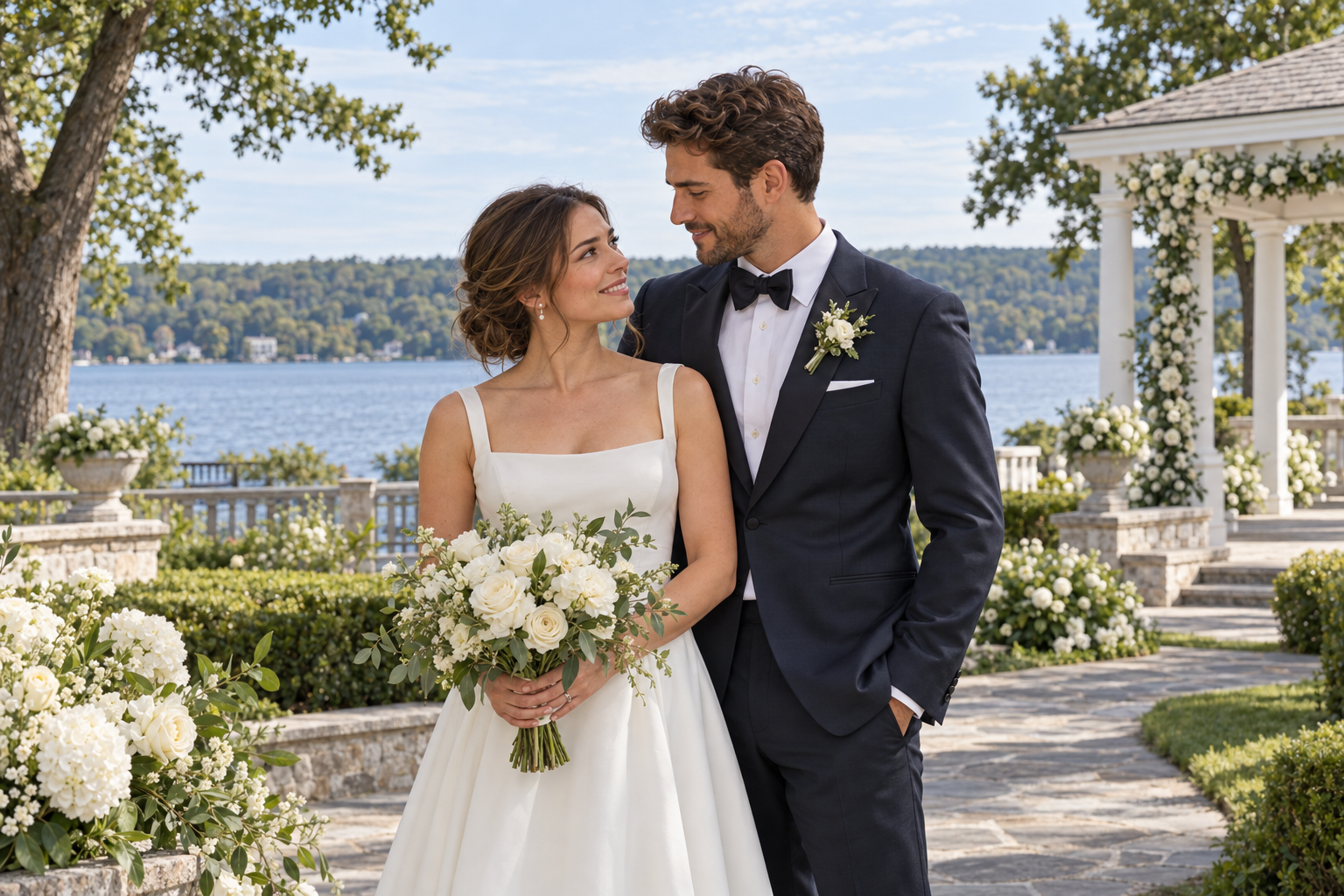
Focus on the feeling.
Move focus between the nearby flowers, the couple and the garden behind them.
Illustrative distances · 50 mm · f/2 · fixed view
The couple stays sharp while nearby flowers and the distant garden soften.
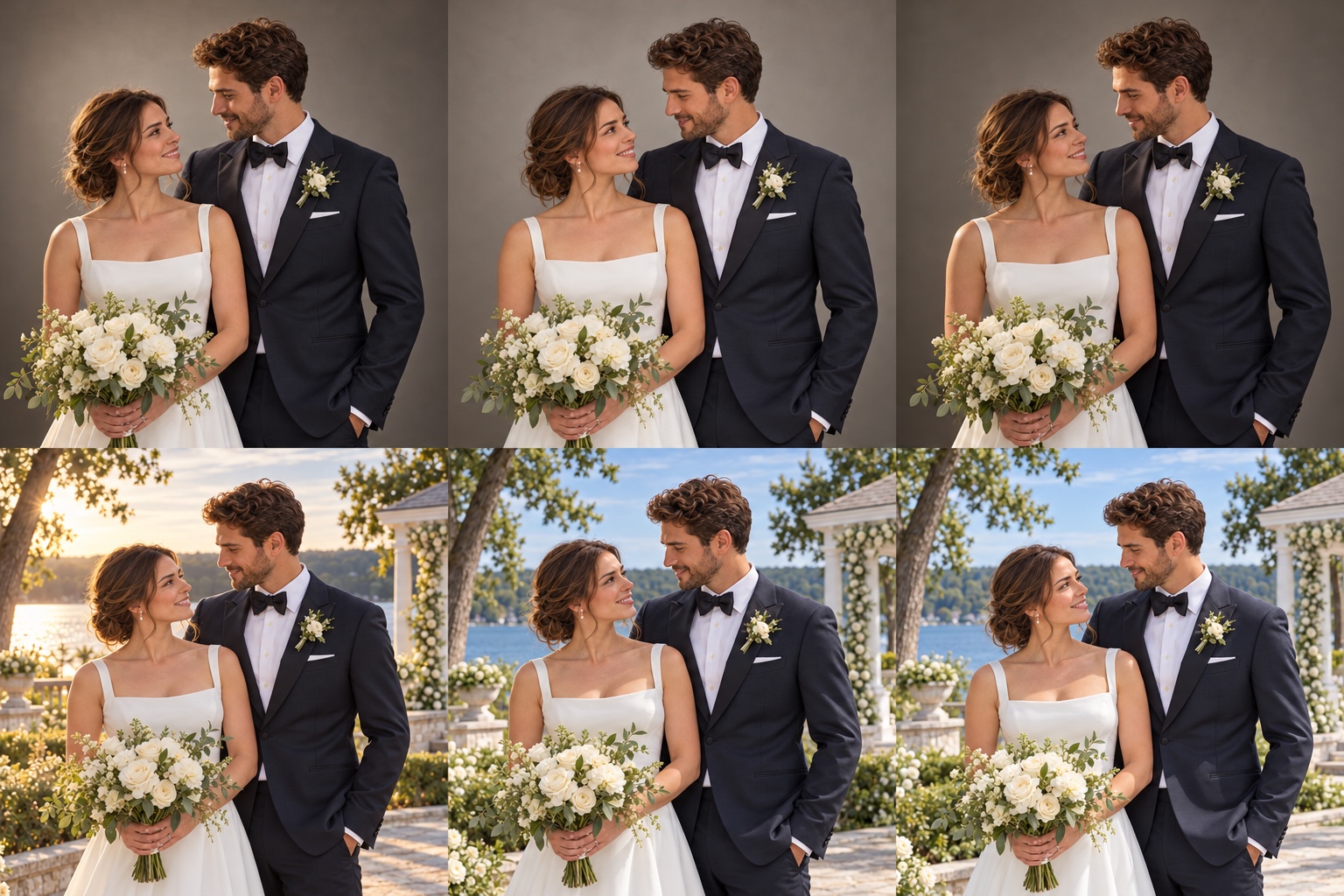
Suggested setup only · no measured lamp position
What this example can show
The photographs are AI-generated lighting sketches of fictional adults, adapted from the approved wedding reference. They are not real client photographs or calibrated exposures. Pose, bouquet, background and facial details can vary slightly between frames. The slider selects three discrete looks; it does not continuously relight one measured 3D scene. The top-view diagrams show possible arrangements, not recovered light positions. Exact ratios, source size, inverse-square falloff and individual cast shadows are not simulated.
The viewpoint is intended to stay similar across the generated sketches. Changes in facial proportions or framing are generation variation, not effects of lighting. No frame interpolation or hidden detail recovery is claimed.
The middle lighting sketch is available. Enable JavaScript to switch the three examples.
Ideal geometry only · generated photo is not calibrated
What this example can show
The photographs are AI-generated sunlight sketches of fictional adults, adapted from the approved wedding reference. They are not real client events or calibrated captures. Pose, framing, colours and background details can vary between frames. Sun-height values belong to the separate ideal diagram. A vertical object of height h casts a level-ground shadow h / tan(elevation); direct irradiance on level ground is direct-normal irradiance × sin(elevation). Atmospheric attenuation, clouds, reflected fill, camera exposure, surface slopes and penumbra are omitted. Neither sunlight colour nor shadow softness is calculated from sun height.
The viewpoint is intended to stay similar across the generated sketches. Changes in facial proportions or framing are generation variation, not effects of lighting. No frame interpolation or hidden detail recovery is claimed.
The middle lighting sketch is available. Enable JavaScript to switch the three examples.
How this illustration works
The source is one AI-generated photograph. Focus and aperture use three approximate depth zones: foreground flowers at 1.4 m, the couple and their bouquet at 3 m, and the garden at 12 m. These distances are teaching assumptions, not measurements of the scene.
Each zone is softened separately using an ideal thin-lens blur estimate for a 50 mm lens and a 36 mm-wide sensor. Subject masks limit colour spill at edges. Nearby background colours are extended behind softened edges; hidden detail is unknown. This is a layered illustration, not a new photograph or a complete optical simulation. Existing softness cannot be removed; hidden areas, individual hair strands, real lens bokeh and diffraction are not reconstructed.
Focal length shows an anchored crop from 35 to 85 mm equivalents. The viewpoint and facial proportions stay fixed. It enlarges existing pixels and does not recover detail. Real photographs made with different lenses can also differ in resolution, lens characteristics and depth of field.
Aperture light is compared with f/4 at the same shutter speed and sensitivity: light varies as 1 / f-number². Equal-brightness mode represents exposure compensation. Turning it off gives a display-limited brightness illustration; highlight clipping is not a sensor simulation.
Optics reference: Physically Based Rendering: camera models.
The source photograph is shown above. Enable JavaScript to try the five experiments.